On this page
Your parents are in their late sixties, living alone in a house that has become too big. You are in another city, or another country, and every hospital visit means a late-night flight. Someone mentions a senior living community with a nurse on call, meals and people their age. It sounds right, but the brochures are vague on what you actually own and what it really costs each month.
This guide explains how senior living homes in India work, the different ways to pay for them, what to check before you sign, and whether they make sense as an investment for someone who does not plan to live in one.
What a senior living home is, and is not
A senior living community is a residential project designed for older adults, usually 55 or 60 and above, with services built in. It is different from an old age home or a nursing home.
- Independent senior living: regular apartments or villas with elder-friendly design, plus services such as a common dining hall, housekeeping, security, a nurse or doctor on call, ambulance tie-up and organised activities. Residents live independently.
- Assisted living: for people who need help with daily tasks such as bathing, dressing or medicines, with trained staff on site.
- Care homes and nursing care: for people recovering from illness or surgery, or living with dementia or long-term conditions. These are closer to medical facilities and usually priced per month.
- Old age homes: often run by charities or trusts, with basic facilities and modest fees.
Many newer projects combine the first two, so residents can move to a higher level of care without leaving the community. Ask whether that is actually on site, or only promised.
The ways you pay: buy, lease or rent
Outright purchase
You buy the apartment like any other flat, with a sale deed in your name, and pay a separate monthly service fee to the operator. This is the most common model for independent living. The catch is in the resale terms: many projects allow resale or renting only to people who meet the age rule, and children who inherit may be able to own the flat but not live in it until they reach that age.
Long lease or life-interest models
Some operators offer a right to live in the home for life or for a long fixed period, against a large one-time payment, sometimes with part of it refundable when you leave. You do not own the property. The terms on refunds, transfers and what happens if the operator changes vary a lot, so these need a careful legal read.
Monthly rental
Some communities rent units by the month, with services included. It costs more each month than owning, but needs no large payment and lets parents try the life before committing. It is a sensible first step for many families.
What it really costs
Purchase prices are usually at or above what a similar-sized ordinary flat costs in the same area, because of the design and common facilities. The bigger difference is the running cost, as of November 2026:
- Monthly service fee: covers housekeeping, security, the medical desk, common-area upkeep and activities. It is usually several times what ordinary society maintenance costs.
- Meals: sometimes included, often charged per person per month on top of the service fee.
- Medical and care charges: nursing visits, physiotherapy, caregivers and assisted-living support are usually billed separately.
- Annual increases: most agreements raise fees every year. Check the cap, if any.
- Utilities and property tax: paid by the owner, as with any flat.
A quick check: add twelve months of service fee, meals for two and a realistic care budget, and compare that with your parents' pension, rent or interest income. A home they can buy but cannot comfortably run is the wrong home.
What to check before paying anything
- RERA registration. A senior living project selling homes must be registered with the state RERA like any other housing project. In Karnataka, look it up on the Karnataka RERA website and read the approvals and the promised completion date.
- Who runs the services. Is the operator the developer, a specialist senior care company, or an outside firm on a contract? Ask what happens if the operator leaves or the contract ends.
- The service agreement. Read it as carefully as the sale deed: what the fee covers, how often it rises, what happens if you stop paying, and whether you can bring in your own caregiver.
- Resale and inheritance rules. Who can you sell to, who can live there after you, and can the flat be rented out?
- Medical backup. How far is the nearest multi-speciality hospital, and how long does an ambulance actually take at peak traffic? Is there a nurse on site at night?
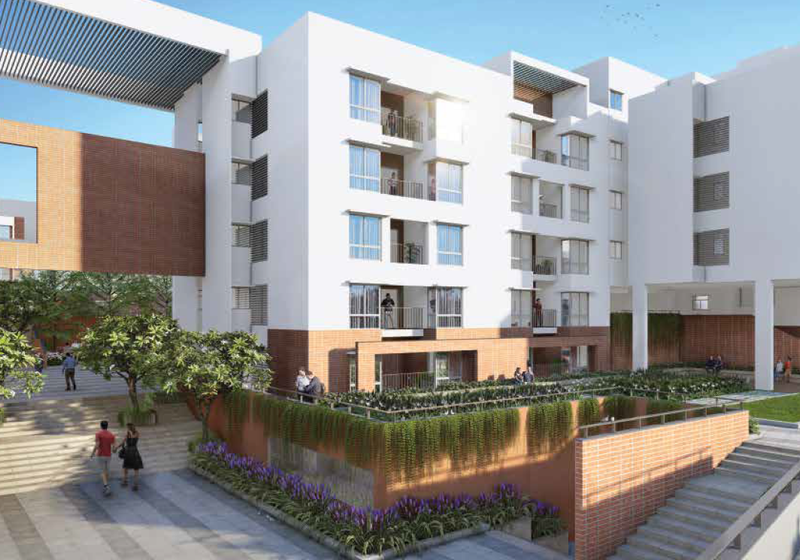
- Design details. Grab bars, non-slip floors, step-free entry, wide doorways for wheelchairs, lifts large enough for a stretcher, emergency call buttons in bedrooms and bathrooms, good lighting.
- Talk to residents. Visit at mealtime, talk to people who have lived there a year or more, and ask what changed after they moved in.
Senior living as an investment
India's older population is growing, and more parents are living alone as children move for work. That is a real long-term demand story. But for someone buying purely to earn a return, senior living has some built-in limits.
- A smaller pool of buyers and tenants. Age rules mean you can only sell or rent to eligible residents, so resale can take longer than for an ordinary flat nearby.
- High running costs. If the flat is empty, the service fee may still be payable. That eats straight into returns.
- Rental depends on the operator. Some operators run a rental pool and share income; others leave you to find tenants. Ask for real past figures, not projections.
- Appreciation is untested. The organised senior living market in India is still young, and resale data is thin in most cities.
Senior living tends to work best as a family decision rather than a pure investment: buy it for parents who will live there, value it for the care and community it gives them, and treat any price growth as a bonus. If you want a rental return, an ordinary flat near jobs and transport is usually easier to let and to sell.
On tax, rent from a senior living unit is taxed like any other rent, as income from house property with the 30% standard deduction. Gains on sale are taxed as capital gains like any property, at 12.5% without indexation if the home is held for more than two years. A CA can help with your family's case, especially if the flat is bought in a parent's name.
Frequently asked questions
Can children buy a senior living home for their parents?
Usually yes. Many projects let a younger buyer own the unit as long as the resident meets the age rule. Check this in the agreement before booking.
Can I get a home loan for a senior living apartment?
Generally yes, for an approved RERA-registered project, though lenders look at the borrower's age and remaining working years. A younger co-applicant such as a son or daughter can help.
What happens when a resident needs full-time care?
Some communities have assisted living or care wings on site; others refer residents to outside care homes. Ask how the move works, what it costs and whether the original home can be kept.
Is a monthly rental option better than buying?
For families unsure whether parents will settle in, renting for six months to a year is a low-risk way to find out before committing a large sum.
This is general information, not legal or financial advice; have a property lawyer read the sale and service agreements together. If you are weighing a senior living home against an ordinary flat near family, Skyros Estates can help you shortlist RERA-verified options and check the paperwork.
Buying a home?
Get a shortlist that fits your budget, site visits arranged, and the papers checked before you pay. Free for buyers.