On this page
The ads are everywhere on your phone: 'Own a quarter-acre mango farm an hour from Bengaluru. We plant it, we manage it, you visit on weekends.' The price looks gentle next to a city flat, the photos look lovely, and the promise of a little land of your own is hard to resist.
Managed farmland can be a fine purchase if you go in with clear eyes. But farmland in Karnataka comes with its own laws, records and risks that a city apartment buyer never deals with. Here is what you need to know as of November 2026.
Who can buy agricultural land in Karnataka today
For decades, Karnataka's Land Reforms Act stopped most non-farmers from buying farmland. Section 79A barred people or families with non-agricultural income of ₹25 lakh a year or more, and Section 79B limited ownership to those who cultivated land themselves.
In 2020, the state removed Sections 79A, 79B and 79C. Since then, resident Indians who are not farmers can generally buy agricultural land in Karnataka. A few things still apply:
- Landholding ceiling limits remain. They depend on the type of land and the size of your family, so large purchases need a check.
- NRIs and OCIs cannot buy agricultural land, plantation property or farmhouses anywhere in India under central foreign exchange rules, whatever the state law says. They can inherit it.
- Land granted to SC/ST families under the state's PTCL law cannot be sold without government permission. A sale that breaks this rule can be cancelled years later.
- The rules may change. The current state government has said it wants to bring back Sections 79A and 79B. As of late September 2026 this had not happened, but check the current position with a lawyer before you buy.
What 'managed farmland' usually means
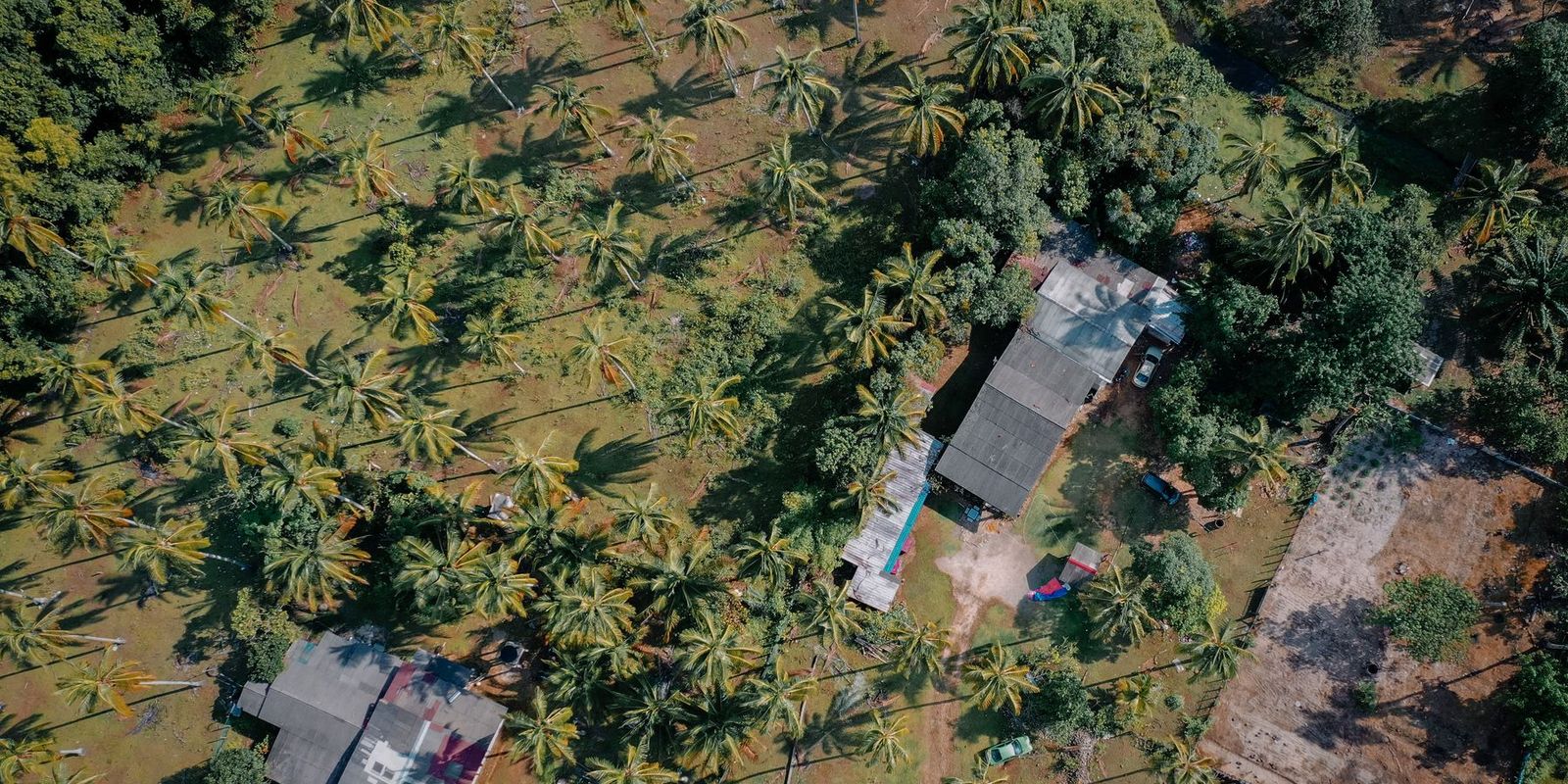
A company buys a large piece of agricultural land, divides it into smaller farm plots (often a quarter acre to two acres), plants trees such as mango, coconut, sandalwood or teak, and sells the plots to individuals. It then charges a yearly fee to maintain the farm and may share harvest income.
The structure matters more than the brochure. Ask exactly what you are buying:
- A separately surveyed plot with its own RTC (the record of rights, tenancy and crops, also called pahani). This is the cleanest option.
- An undivided share in a larger survey number. You co-own the whole land with other buyers. Selling, getting a loan or building anything later needs everyone's cooperation.
- Shares or units in a company or LLP that owns the land. You do not own land at all. You own a stake in a business.
Agricultural land is recorded by survey number and hissa (sub-division) number. A 'plot' that has not been formally sub-divided through the podi process and given its own RTC is, legally, just a share of the larger land, whatever the sale deed's sketch shows.
Conversion: can you build on it?
Agricultural land is meant for farming. To use it for a house, layout or commercial building, it must be converted to non-agricultural use under Section 95 of the Karnataka Land Revenue Act, 1964, through the Deputy Commissioner's office, and the use must match the local master plan.
Karnataka has eased some conversion procedures in recent years, and amended rules from September 2025 changed the paperwork, including a notarised affidavit with applications. But a few points have not changed:
- A large farmhouse, a resort or a villa on unconverted farmland can face penalties and demolition notices.
- Banks rarely lend against unconverted farm plots, so most buyers pay in full from savings.
- Plots sold as 'farm plots' but laid out like a residential layout, with roads and compound walls and no conversion, are a common trap on the edges of Bengaluru.
If the seller talks about building a weekend cottage, ask for the conversion order and the approved plan in writing. If they do not have them, assume you cannot build more than what local farm rules allow.
Title risks specific to farmland
Farmland titles around Bengaluru often have long, tangled histories: family partitions that were never registered, tenancy claims from the land reform years, old government grants, and boundary disputes. Have a lawyer check at least:
- RTC (pahani) for the last 30 years or more on the Bhoomi records, showing owners, area and land type.
- Mutation register entries that explain every change of owner.
- Encumbrance certificate for 30 years.
- Survey sketch and podi records confirming your exact piece of land and its boundaries.
- Grant and PTCL history, to make sure the land was never granted land with sale restrictions.
- Family consent from every legal heir who could have a share, especially in inherited land.
- Zoning in the local master plan, including any green belt or lake buffer restrictions.
For managed farmland, also read the management agreement. Look at the yearly fee, who owns the trees and the harvest, how long you are locked in, and what happens if the company shuts down.
The returns reality
Marketing for managed farms often mixes two different kinds of return: farm income and land appreciation.
Farm income is usually small
Near Bengaluru, land prices are driven by the city, not by crops. A mango or coconut orchard may produce real income once mature, but after the management fee it is often a small fraction of the land price. Trees like sandalwood and teak take a decade or more before any harvest, and selling sandalwood involves its own permissions. Treat any projected 'yield' as a guess until you see audited figures from mature farms run by the same company.
A simple example: you pay ₹25 lakh for half an acre and ₹60,000 a year in management fees. Even if the harvest brings in ₹70,000 a year once the trees mature, your net farm income is about ₹10,000, or 0.4% of what you paid.
Appreciation depends on location and paperwork
Farmland can appreciate well when a city expands towards it, a highway or ring road arrives, or it becomes convertible. But these gains come mostly to land with clean, individual titles and good road access. An undivided share in a remote survey number may be very hard to sell at any price.
Tax points
Under the old Income Tax Act, income from agriculture was exempt from tax, and agricultural land in rural areas (outside set distances from municipal limits) was not treated as a capital asset at all. The Income Tax Act, 2025 replaced the 1961 Act from 1 April 2026, so check with a CA how these rules apply to your case. Note too that the 1% TDS on property purchases above ₹50 lakh does not apply to rural agricultural land. Harvest income paid out by a management company may not count as your agricultural income.
Red flags to walk away from
- 'Assured returns' or a buyback promise with no registered agreement behind it.
- No RTC, survey number or sale deed shown before you pay.
- Pressure to pay a large amount before a lawyer has seen the documents.
- Pooled 'units' in a plantation where you never own a specific piece of land. Schemes like this have run into SEBI's collective investment scheme rules in the past.
- Plots marketed as ready for a farmhouse or villa with no conversion order.
Frequently asked questions
Can a salaried IT professional buy farmland in Karnataka?
Yes. Since the 2020 amendment, resident Indians do not need to be farmers or stay under an income limit. Check the current law before buying, because restoration of the old limits has been discussed.
Can I get a home loan for a managed farm plot?
Generally no. Home loans are for residential property. Agricultural land loans are usually limited to people who farm it, so most buyers pay from savings.
Is an undivided share in farmland safe?
It is legal, but harder to sell, mortgage or build on. A separately surveyed plot with its own RTC is much better.
Can I build a weekend cottage on my farm plot?
Only within what local rules allow on agricultural land, unless the land is converted. Get written advice from a local lawyer for your survey number.
If you are looking at farm plots or land around Bengaluru, Skyros Estates can help you arrange a title check with a local lawyer and compare the deal against other property options before you pay anything.
Buying a home?
Get a shortlist that fits your budget, site visits arranged, and the papers checked before you pay. Free for buyers.