On this page
- Why lake view apartments in Bangalore cost more
- Lake buffer zone rules: what the law says now
- Flood risk is the biggest hidden cost
- Sewage, foam and smell: the Bellandur and Varthur story
- Mosquitoes, birds and daily life
- How to check a lake's health and the land records
- Lakes that are generally well kept
- Frequently Asked Questions
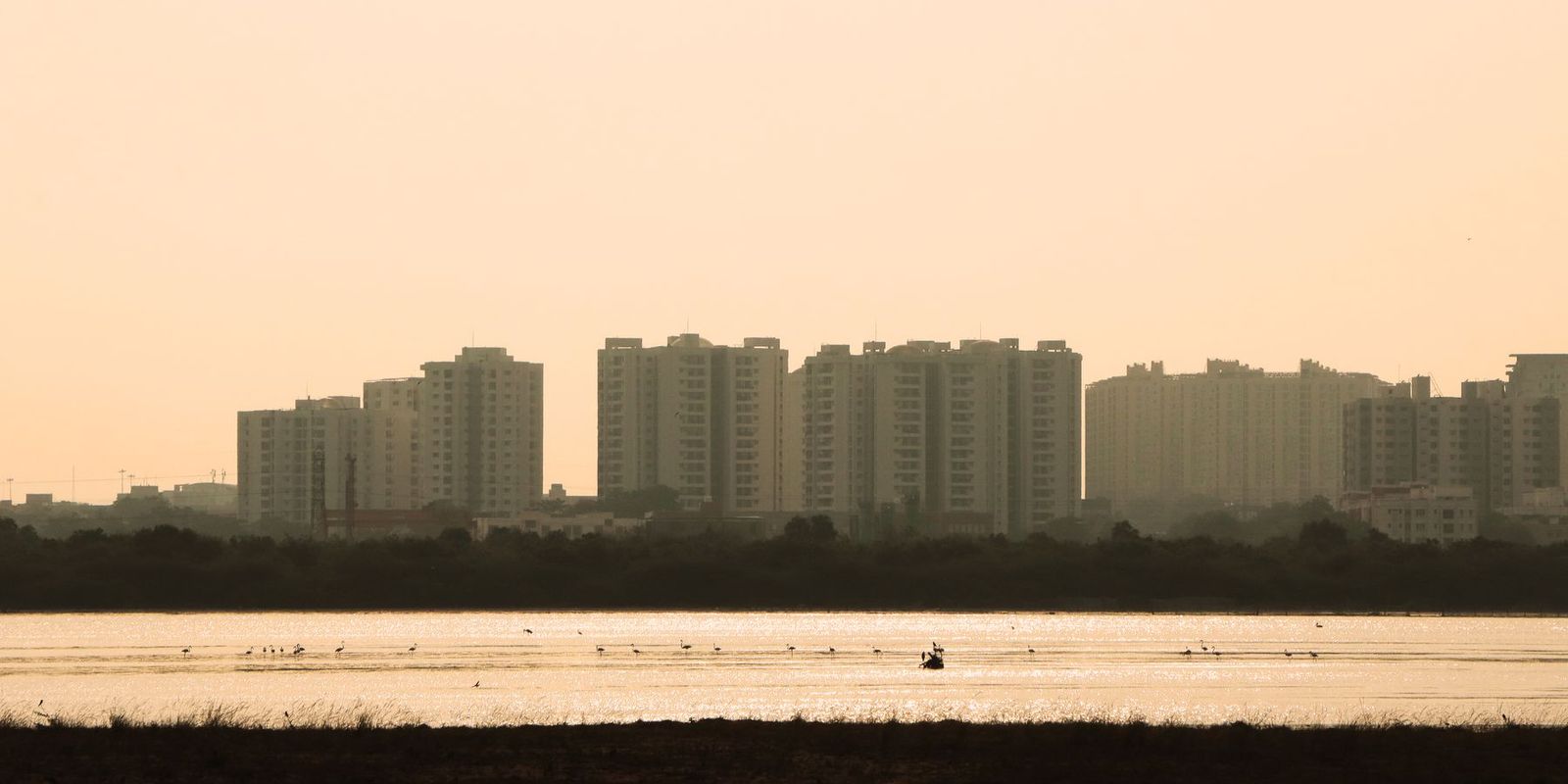
A balcony that looks over water is one of the most requested features in the city, and builders know it. But lake view apartments in Bangalore come with questions a normal flat doesn't: how close the building legally sits to the lake, whether the area floods, what the water smells like in April, and how much extra you are paying for the view. This guide covers what to check before you sign.
Why lake view apartments in Bangalore cost more
Lake-facing units are usually priced higher than the same flat facing the road or another tower. Builders add this either as a higher base rate or as a preferential location charge (PLC) for the view, and the premium varies a lot by project and by how much of the lake you can actually see.
There is no reliable city-wide figure for this premium, so work it out yourself. Ask the sales team for the per-sq-ft price of a lake-facing unit and a non-facing unit on the same floor of the same tower. The difference is what you are paying for the view, and it is worth asking whether a higher floor on the non-facing side gives you a partial view for less.
Lake buffer zone rules: what the law says now
Every lake in Bangalore has a no-construction buffer zone around it. The history here confuses many buyers, so here is the short version.
- In 2016, the National Green Tribunal (NGT) ordered a 75-metre buffer around lakes and wider buffers along storm-water drains (rajakaluves) in Bengaluru.
- On 5 March 2019, the Supreme Court set aside that expansion on appeal from the Karnataka government. The buffer reverted to the 30 metres set out in the BDA's Revised Master Plan 2015, with separate, smaller buffers for primary, secondary and tertiary drains.
- The same judgment upheld penalties on two developers for encroaching on water bodies, which shows that buffer violations can still cost a project dearly.
- In 2025, the Karnataka legislature passed an amendment to the Karnataka Tank Conservation and Development Authority Act that would replace the flat 30 metres with a size-based buffer (from a few metres for very small tanks up to 30 metres for lakes above 100 acres). The Governor returned the bill for clarification in September 2025, and its final status should be checked before you rely on it.
For a buyer, the practical point is simple: confirm that no part of the building, its basement or its boundary wall sits within the buffer that applied when the plan was approved. Ask the builder for the approved layout showing the lake boundary and the buffer line, and check the latest rule before you buy, since this area of law has changed more than once.
Flood risk is the biggest hidden cost
Lakes in Bangalore are linked by a chain of drains, and when those drains are blocked or built over, water backs up into nearby roads and basements. In late August and early September 2022, heavy rain flooded the Outer Ring Road near Bellandur and Ecospace, and residential layouts such as Rainbow Drive and Sunny Brooks on Sarjapur Road, and parts of Yemalur, were under water for days.
To judge a specific project:
- Ask residents of nearby buildings, and the security staff, whether the area flooded in 2022 or in any recent monsoon.
- Check whether the site sits lower than the lake's outlet or next to a rajakaluve. Low-lying plots downstream of a lake carry more risk.
- Look at where the basement parking and electrical panels are. Ground-floor and basement equipment is what fails first.
- Visit once during or just after a heavy rain, not only on a sunny weekend.
Sewage, foam and smell: the Bellandur and Varthur story
Bellandur, the city's largest lake at around 890 acres, and Varthur downstream became known around the world for toxic foam that spilled onto roads, usually in the pre-monsoon and monsoon months. The cause is untreated sewage flowing in from the surrounding areas; at one stage the NGT noted hundreds of millions of litres a day entering Bellandur.
The Bangalore Development Authority (BDA) has been running a desilting and rejuvenation project at Bellandur, with deadlines that have slipped repeatedly, most recently to March 2026. Conditions have improved in some stretches, but a lake view here still means accepting some risk of odour and foam in certain seasons. Check recent news before you decide.
Mosquitoes, birds and daily life
Stagnant or sewage-fed water breeds mosquitoes, and flats on lower floors facing a weedy, shallow lake usually get the worst of it. Higher floors, good window mesh and a lake with moving, clean water make a big difference.
The upside is real too. A healthy lake brings cooler evenings, birdlife, a walking track and open sky that no amount of landscaping inside a gated project can match.
How to check a lake's health and the land records
You don't need to be an expert to get a reasonable picture. Use this sequence:
- Visit at three times: early morning, evening and once in April or May, when water levels are low and smells are strongest.
- Look at the inlets. Black or grey water flowing in through drains is a sign of untreated sewage. Ask whether there is a working sewage treatment plant or diversion channel upstream.
- Find out who maintains it. Lakes with an active citizen trust or a formal maintenance agreement with the city corporation tend to stay cleaner.
- Check the survey number. Use the state's Dishaank app at the site to see the survey number and boundary, then pull the RTC (Record of Rights, Tenancy and Crops) on the Bhoomi land records portal. The land type and remarks should show if any part is a tank bed or government kharab land.
- Cross-check the master plan. The BDA Revised Master Plan 2015 land-use maps show lakes, drains and buffers. For a formal answer, ask the taluk office or the survey department; the app alone is not a legal determination.
Also run the usual checks: RERA Karnataka registration, approved plan, khata status through e-Aasthi, and an encumbrance certificate. Our guides on each of these cover the steps in detail.
Lakes that are generally well kept
Lake condition changes year to year, so treat this as a list to visit, not a guarantee.
- Jakkur Lake (north): maintained with the involvement of the citizen group Jalaposhan since a 2015 agreement, and known for its birdlife.
- Puttenahalli Lake (JP Nagar): looked after for over a decade by a resident trust, and popular with birdwatchers.
- Kaikondrahalli Lake (Sarjapur Road): revived through a resident-led effort that cleared encroachments and diverted sewage.
Even these lakes still face sewage inflow from storm-water drains at times. A well-run lake today is a good sign, not a promise for the next 20 years.
Frequently Asked Questions
What is the lake buffer zone in Bangalore?
The applicable buffer has been 30 metres from the lake boundary since the Supreme Court set aside the NGT's 75-metre order in 2019. A 2025 amendment proposing smaller buffers for smaller lakes was returned by the Governor, so check its current status before you buy.
Are lake view apartments in Bangalore a good investment?
They can hold value well when the lake is clean and the area doesn't flood. A lake view next to a polluted or flood-prone lake can actually hurt resale, so lake health matters more than the view itself.
How do I know if a flat was built on lake land?
Check the survey number's RTC on the Bhoomi portal, the BDA master plan map and the approved layout. If anything shows tank bed or kharab land, take legal advice before paying.
Is Bellandur safe to buy in now?
Many buyers live there comfortably, but flooding in 2022 and the lake's foam history mean you should check the specific building's elevation, drainage and past flood record. Rejuvenation work has been slow, so don't pay a large premium on the assumption it will be finished soon.
Do lake-facing flats have more mosquitoes?
Often, yes, especially on lower floors near shallow, weedy or sewage-fed lakes. Higher floors and good window mesh reduce the problem considerably.
If you are weighing a lake-facing flat, Skyros Estates can shortlist projects near well-kept lakes, join you on site visits and help check the land records and buffer compliance before you commit.
Buying a home?
Get a shortlist that fits your budget, site visits arranged, and the papers checked before you pay. Free for buyers.