On this page
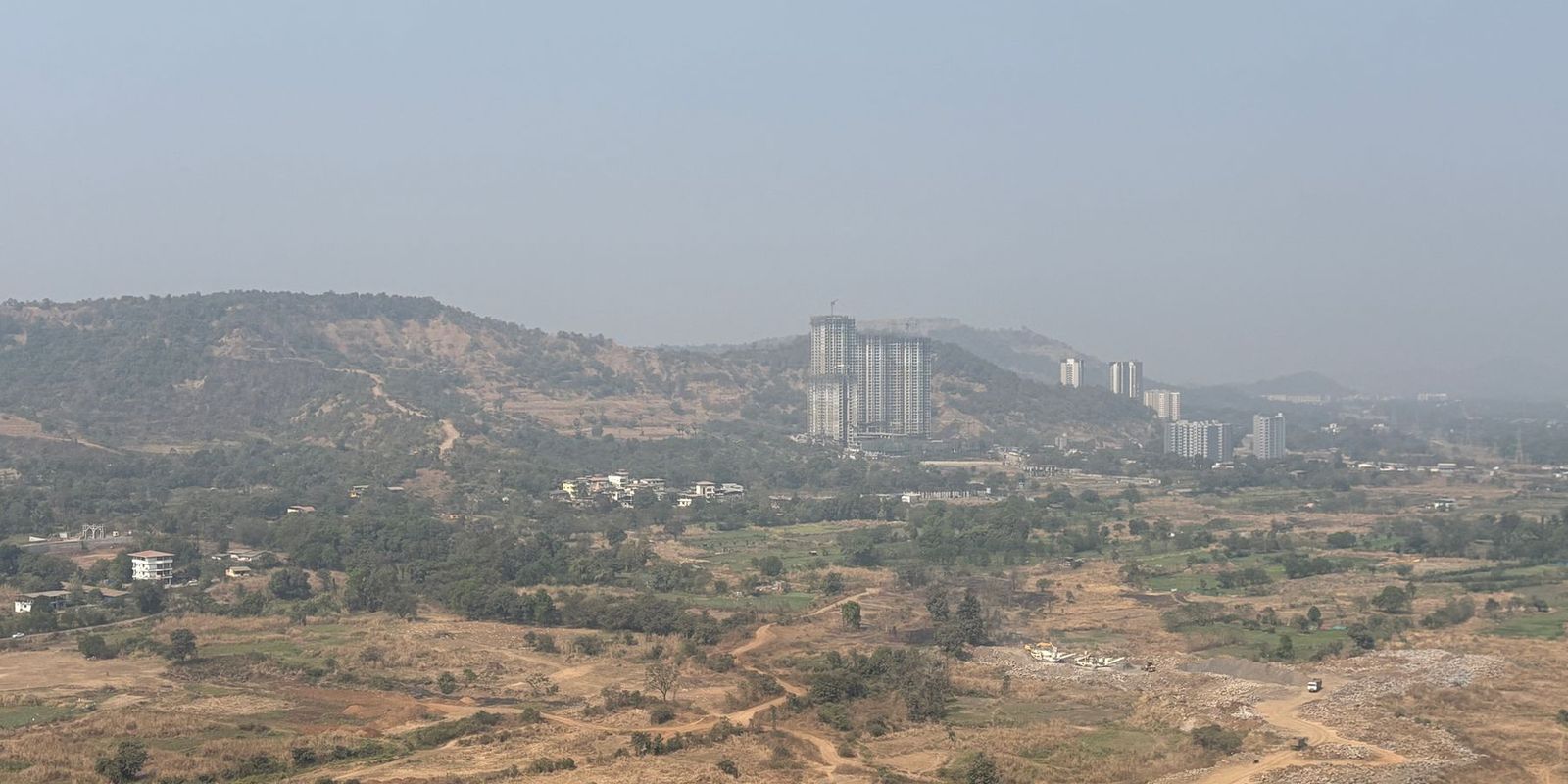
Drive 30 km out of the city in almost any direction and you will see the same thing: tower cranes standing in fields, and hoardings from developers you once only saw on Whitefield or Hebbal. Big builders are betting heavily on the edge of the city. If you are thinking about buying property on Bangalore outskirts, it helps to understand why they are going there, because their reasons and yours are not always the same.
Why large developers are building on the edge
The short answer is land. Inside the city, a large clean land parcel is rare and expensive, and buying it often means dealing with dozens of owners. On the outskirts, a developer can still put together 30, 50 or 100 acres from fewer owners, often through joint development agreements where the landowner gets a share of the flats instead of cash.
That land cost advantage lets builders do three things that are hard in the city:
- Price lower per sq ft while keeping healthy margins
- Build at township scale, with clubhouses, schools, retail and open space inside one boundary
- Phase the project, selling early towers cheaper and raising prices in later phases as the area fills up
Infrastructure on paper also helps their story. The Satellite Town Ring Road, the Bengaluru Business Corridor, suburban rail and metro extensions all feature in launch brochures. Our guide on Bangalore infrastructure projects covers which of these are actually built.
The main outskirt corridors in 2026
Devanahalli and the airport belt
Driven by Kempegowda International Airport, the ITIR industrial zone, the aerospace park and electronics manufacturing nearby. Apartment asking prices were reported roughly in the ₹7,800–9,300 per sq ft range in mid-2026, with plotted layouts a big part of the market. Daily commute to central or south Bengaluru is long.
Hoskote
On Old Madras Road at the eastern edge, where the STRR and the Bengaluru–Chennai Expressway meet. Warehousing and industrial jobs are growing. Average apartment rates vary widely by source, roughly ₹7,000–10,000 per sq ft as of 2026. A metro extension from KR Puram is only being studied.
Kanakapura Road beyond NICE
Past the NICE Road junction, around Thalaghattapura, Vajarahalli and further towards Harohalli. The Green Line metro ends near Silk Institute, which helps the inner stretch. Outer pockets were quoted roughly at ₹7,500–8,500 per sq ft. Second-airport talk adds interest, but no site has been finalised.
Sarjapur–Attibele
The stretch from Dommasandra and Sarjapur town towards Attibele near the Tamil Nadu border. It draws buyers from the ORR and Electronic City job belts and benefits from Hosur's industry. Roads between these points are still narrow in many places.
Bidadi
On the Mysuru Road side, with an established industrial base. The state's large township plan here, being driven by the Greater Bengaluru Development Authority, was still in land acquisition in 2026 with farmer opposition. Notified land cannot be freely sold during acquisition, so checking survey numbers is essential.
Doddaballapur
North of Yelahanka with an older industrial area and an open STRR section nearby. Prices are among the lowest of these corridors, and so is current rental demand.
The real advantages
- Price: you typically get a larger home or a better-specified project for the same budget than you would in Whitefield, Hebbal or JP Nagar.
- Space and greenery: bigger open areas, lower density, cleaner air in many pockets.
- Appreciation potential: if a corridor fills up with jobs and schools, early buyers usually gain the most. Airport-belt land values, for example, rose sharply between 2022 and 2025 according to industry reports.
- Township amenities: large projects can include schools, clinics and daily shopping that a standalone city building cannot.
A simple way to see the price gap: the same ₹1 crore budget that buys a compact 2BHK in an established eastern or northern locality can often buy a larger 3BHK in a new outskirts township, as of 2026. Whether that extra room is worth the longer commute depends entirely on how often you need to be in the city.
The real drawbacks
- Social infrastructure lag: good schools, hospitals and markets often arrive five or more years after the first residents. Until then, every errand is a drive.
- Commute: a 35–50 km office run, often on roads still being widened, is a daily cost in time and fuel. Measure it at 9 am, not on a Sunday.
- Rental demand: tenants want to live near work. Outskirt rental yields tend to be lower, and finding a tenant can take months, which matters if you are buying to rent out. Our guide on rental yield explains the maths.
- Water and power: many projects outside city limits rely on borewells, tankers and their own treatment plants, with no BWSSB Cauvery supply.
- Joint development risk: where the landowner holds a share of flats, disputes between owner and builder can delay handovers. Ask whether the JDA is registered and who owns which units.
- Resale liquidity: when a corridor has hundreds of new launches, your resale flat competes with fresh inventory offering builder discounts.
Approvals when buying property on Bangalore outskirts
This is where buying property on Bangalore outskirts differs most from buying in the city. Areas outside the Greater Bengaluru Authority (the old BBMP) and BDA limits fall under the Bangalore Metropolitan Region Development Authority (BMRDA) region. Layout and building plans are usually sanctioned by local planning authorities such as the Hoskote, Nelamangala, Magadi, Kanakapura and Anekal planning authorities, and around the airport by BIAAPA.
Khata for such properties comes from the local body, often a gram panchayat, through the e-Swathu system, not from e-Khata in the city. Banks are more careful with panchayat properties and with layouts lacking a proper approval. Watch for ads that say "BMRDA approved" without an approval order and layout number you can verify with the right authority.
RERA Karnataka registration is still required for qualifying projects anywhere in the state. Our guide on RERA Karnataka checks shows how to look up a project.
Checklist before you commit
- Confirm the planning authority and get the sanctioned layout or building plan, with the approval number.
- Check RERA Karnataka registration, the promised completion date and the quarterly progress updates.
- Verify land conversion (agricultural to residential) and that the survey number is not under any acquisition notification for a road, township or industrial park.
- Look at the builder's track record in delivering phase 1 of a similar township, not just their city projects.
- Ask about water: source, borewell yield, STP capacity and expected monthly maintenance.
- Drive the commute at peak hour and note where the nearest good school and hospital are today.
- Check which banks have approved the project for home loans.
- Plan for a holding period of seven to ten years if appreciation is your main reason.
Frequently Asked Questions
Is buying property on Bangalore outskirts a good investment in 2026?
It can be, if you buy in a corridor with real jobs nearby, from a builder with a delivery record, and can hold for several years. It is a weaker choice if you need rental income or a quick resale.
Which outskirt area of Bangalore has the best growth potential?
Devanahalli and Hoskote have the most built infrastructure today, thanks to the airport and the STRR. Kanakapura Road and Bidadi depend more on projects that are still being decided.
Can I get a home loan for a BMRDA-area property?
Yes, for projects with clear approvals, conversion and title. Banks often decline or limit loans for revenue sites or panchayat plots without a sanctioned layout.
What is the difference between BDA and BMRDA approval?
BDA plans the area within its own limits around the city. BMRDA covers the wider metropolitan region, where local planning authorities like Hoskote or Anekal usually sanction layouts.
How long does social infrastructure take to come up on the outskirts?
There is no fixed timeline, but in most Bengaluru corridors schools, hospitals and retail followed residents by five to ten years.
If an outskirts project is on your list, Skyros Estates can help you compare corridors, check approvals and land documents, and arrange site visits so you see the commute and surroundings for yourself.
Buying a home?
Get a shortlist that fits your budget, site visits arranged, and the papers checked before you pay. Free for buyers.