On this page
A project brochure in Hebbal or Yelahanka will almost certainly mention the airport metro, often with a line like 'minutes from the upcoming Blue Line'. A rental listing in Bellandur might say the same. If you are about to spend ₹1 crore or more partly on that promise, you deserve a clear picture of when it is actually coming and what it will change.
Here is the Blue Line as of November 2026: the route, the revised dates, and a practical way to judge which homes along it are worth paying more for.
What the Blue Line is
The Blue Line is Namma Metro's airport line. It runs about 58 km from Central Silk Board to Kempegowda International Airport (KIA), with 29 stations. It is being built in two phases:
- Phase 2A, Silk Board to KR Puram (about 19.75 km): runs along the Outer Ring Road through HSR Layout, Agara, Ibbalur, Bellandur, Kadubeesanahalli, Marathahalli, ISRO, Doddanekundi, DRDO Sports Complex and Saraswathi Nagar to KR Puram.
- Phase 2B, KR Puram to the airport (about 38.4 km): continues through Kasturi Nagar, Horamavu, HRBR Layout, Kalyan Nagar, HBR Layout, Nagawara, Veerannapalya, Kempapura, Hebbal, Kodigehalli, Jakkur Cross, Yelahanka, Bagalur Cross and Doddajala to Airport City and an underground station at the KIA terminals.
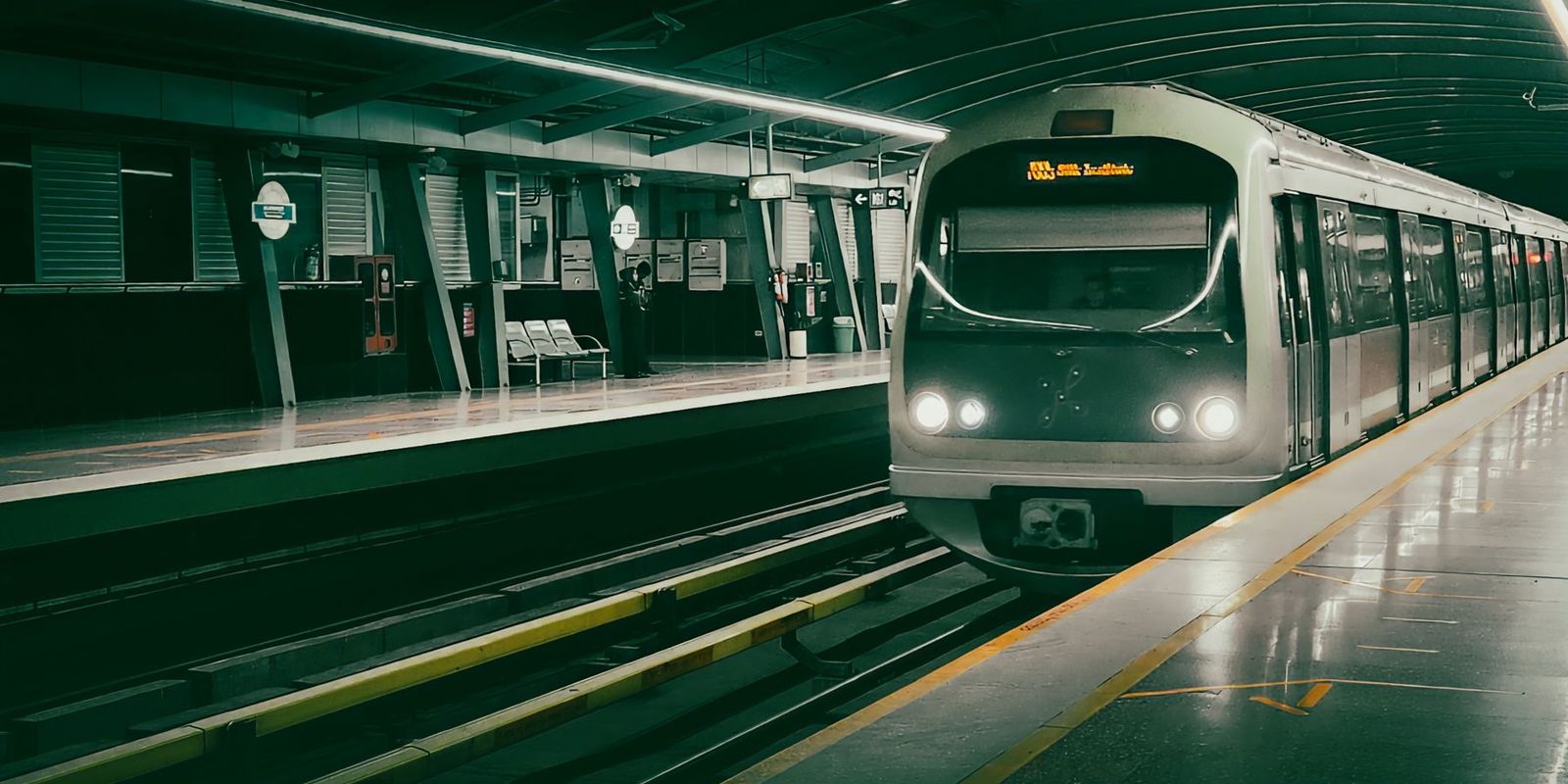
The trains will be driverless, and almost the entire line is above the road, except the final airport stations.
Interchanges that matter
- Central Silk Board: Yellow Line, towards Electronic City and Jayanagar
- KR Puram: Purple Line, towards Whitefield and MG Road, plus the KR Puram railway station
- Nagawara: Pink Line, once its underground section is complete
- Hebbal and Kempapura: planned interchanges with the approved Phase 3 lines
Those links are why the Blue Line matters far beyond airport trips. It turns the ORR, Bengaluru's biggest office corridor, into a metro corridor.
Status as of November 2026
The original plan was to open the airport line by June 2026. That date has passed. Reports from August to October 2026 put overall construction at roughly three quarters complete and give these revised targets:
- Silk Board to KR Puram: trial runs expected from late 2026, with commercial service around mid-2027
- Hebbal to the airport: around September 2027
- KR Puram to Hebbal: between December 2027 and March 2028, the most difficult stretch because of land, utility and station issues
- Full Silk Board to airport line: around March 2028
Two cautions. First, sources do not fully agree, and earlier targets have slipped more than once. Second, a section opening on its own does not always help. Hebbal to the airport is useful for north Bengaluru residents, but someone in Bellandur only gets a one-seat ride to the airport when the KR Puram to Hebbal link is finished.
Which areas may benefit, and how
ORR east: Bellandur, Kadubeesanahalli, Marathahalli, Doddanekundi
This is where the biggest daily change happens. Tens of thousands of office workers commute along this stretch, and the ORR is one of the city's slowest roads at peak hour. Homes within walking distance of these stations should see stronger rental demand once trains run. Much of this is already priced in after years of construction, so the gain is more about steady occupancy than a sudden price jump.
KR Puram and Kasturi Nagar
KR Puram becomes a Purple-Blue interchange, which makes it one of the better-connected points in east Bengaluru. It remains a value pocket because of road congestion.
Kalyan Nagar, HRBR, HBR Layout, Horamavu
These established residential areas have lacked a metro until now. Once phase 2B opens, they connect to the ORR offices to the south, Manyata Tech Park via Nagawara, and the airport to the north. Buyers here are paying for a neighbourhood that already works, with the metro as a bonus.
Hebbal, Kodigehalli, Jakkur, Yelahanka
North Bengaluru gets the airport link first. Hebbal also becomes a hub for future Phase 3 lines. Yelahanka and Jakkur already benefit from good road access to the airport, so the metro mainly adds a reliable option for office commutes towards the ORR.
Bagalur Cross, Doddajala, Airport City
Past Yelahanka the stations are far apart and the surroundings are still developing. Projects here often lean hardest on the metro in marketing. Be careful: a station 3 km away down an unlit road does not change your daily life much.
A simple way to value a metro promise
Here is a rough example of how to think about paying a premium for a home near a future Blue Line station:
- Home A: ₹1.10 crore, 600 metres from a station
- Home B: ₹95 lakh, similar size, 3 km from the station
- The ₹15 lakh premium adds roughly ₹13,000 a month in EMI on a 20-year loan at around 8.5%, as of November 2026.
- What it buys: if two working adults each save 40 minutes a day and a few hundred rupees in fuel or cabs, and airport trips no longer need a cab that often costs well over ₹1,000, the premium can be reasonable for a home you will live in.
For an investor, ask a different question: will a tenant pay noticeably more rent to live 600 metres from the station? On the ORR, often yes. Near Doddajala in 2026, the answer is less clear.
Three mistakes buyers make with metro promises
- Paying today for a date that may move. If the station opens a year late, you are still paying EMI on the premium during that year. Budget as if the opening could slip.
- Confusing 'near the line' with 'near a station'. The viaduct may pass your building, but the nearest station could be 2 km away. Only stations matter for commuting.
- Forgetting the last mile. Many Blue Line stations sit on the ORR or busy highways. If crossing the road to reach the station is unsafe, the real walking distance is longer than the map shows.
A useful habit: ask the seller or builder which station the home is closest to, then check that station's section and its latest target date yourself. If the answer is vague, treat the metro as a long-term bonus rather than part of the price.
What to check before you buy along the Blue Line
- Find the exact station location on BMRCL's alignment, not the brochure map. Then walk it.
- Check the opening date for that specific section, not the whole line.
- Look at the road from your gate to the station. Footpaths, lighting and safe crossings matter as much as distance.
- Ask about noise and privacy if the flat directly faces the viaduct.
- Verify RERA registration and completion dates on the Karnataka RERA website for under-construction projects.
- Do not let the metro cover for weak basics such as unclear title, water supply problems or poor access roads.
Frequently asked questions
When will the Bengaluru airport metro open?
As of November 2026, the Hebbal to airport section is targeted around September 2027, and the full line from Silk Board around March 2028. Check BMRCL's latest updates, as dates have changed before.
Will the Blue Line connect to the Purple and Yellow lines?
Yes. It will connect with the Yellow Line at Silk Board, the Purple Line at KR Puram and the Pink Line at Nagawara.
Do homes near metro stations always go up in value?
Not always, and not by a fixed amount. Homes within walking distance tend to rent faster and hold value better, but much of the expected benefit is often priced in during construction.
Which part of the Blue Line opens first?
Silk Board to KR Puram along the ORR is expected first, with commercial service around mid-2027 after trials and safety approval.
If you are considering a home along the Blue Line, Skyros Estates can shortlist RERA-verified projects by real walking distance to stations and help you compare loan offers before you decide.
Buying a home?
Get a shortlist that fits your budget, site visits arranged, and the papers checked before you pay. Free for buyers.